

Kratovo man stabs police officer mid-intervention: prosecutors want the 40-year-old detained
15.09.2026


15.09.2026

15.09.2026
15.09.2026
15.09.2026
15.09.2026
15.09.2026
15.09.2026

14.09.2026
13.09.2026

15.09.2026

15.09.2026

14.09.2026

15.09.2026

15.09.2026

15.09.2026

15.09.2026

14.09.2026

13.09.2026
15.09.2026

15.09.2026

15.09.2026

15.09.2026

15.09.2026

14.09.2026

09.03.2026

27.02.2026

19.02.2026

15.09.2026

14.09.2026
14.09.2026

23.04.2026

23.04.2026

12.04.2026

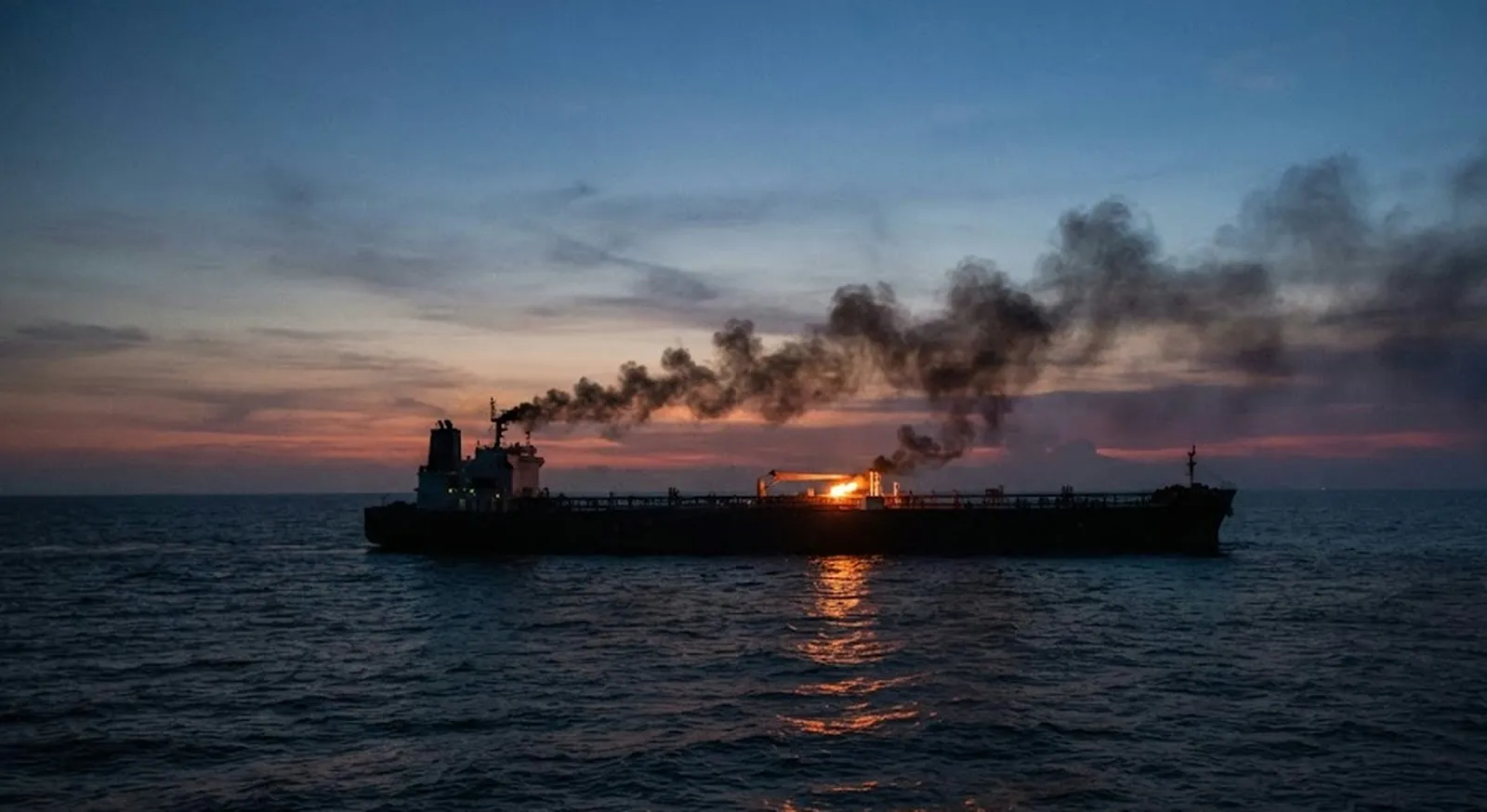
For the tenth night running, the sky over Iran is on fire. US strikes this morning hit targets in several parts of the country, and Iranian agencies are reporting explosions from the southeast to the ports of the Gulf of Oman. A war that has dragged on for nearly five months and refuses to find an ending - or at least someone willing to bring it to one.
The Iranian agency Tasnim reported detonations in Konarak, in Hormozgan province, and in the port city of Chabahar. State broadcaster Press TV carried word of strikes near Shiraz too, and the Fars agency of multiple blasts around Qeshm island and the city of Bandar Abbas. In other words - hits running the full length of Iran's southern coast.
Hormuz - the narrow pipe that carries half the world's oil
US Central Command (CENTCOM) said the strikes began at 23:30 local time but disclosed no specific targets. The official phrasing is that the attacks are designed to „degrade Iranian military capabilities” used to attack commercial ships in the Strait of Hormuz. Translated out of military-speak: they are fighting for control of one of the narrowest and most important throats of world trade.
And the fact that this is the Strait of Hormuz is no small detail. Through that war zone, barely twenty kilometres wide at its tightest, passes a huge share of the world's exports of oil, gas and fertiliser. When someone starts shooting at tankers here, the price of it does not stay in the Persian Gulf - it travels the world in ways anyone who remembers a single oil shock understands.
„The consequences of trusting America”
In the middle of all this, Britain's maritime agency UKMTO reported that a tanker had been hit by an unidentified projectile off the Omani coast, a day after another ship had already burned in the same zone. The crew abandoned ship and escaped in lifeboats, with no environmental damage reported. Neither the vessel nor its owner was identified - which by itself says how murky it has become who is hitting whom out here.
Iran's state agency IRIB, for its part, published a photo of the burning tanker with the caption: „The consequences of trusting America. This is a scene from Hormuz.” Propaganda, of course - but propaganda that works precisely because the scene is real. Iran's Revolutionary Guard added that two tankers had caught fire after explosions while trying to pass along the southern route. Reuters could not independently verify the claim, a good reminder that in a war like this each side is the first to release its own numbers.
Who exactly needs this war?
Tehran wants ships to pass along a route hugging the Iranian coast and keeps repeating that only the paths Iran dictates are safe. The argument over who commands passage through the strait has become the centre of the whole escalation. And it is a classic Balkan scene, looked at up close: two powers pulling for control of a single chokepoint, while the risk is carried by the ships, the crews and the trade that has to pass through.
The Balkans know this pattern by heart - when the big players quarrel over a crossing, the small ones watch from the side and hope it does not flare up worse. The question hanging over this tenth night of strikes is simple: which of the two actually wants to stand down first, and what if the answer is - neither?
The latest 10 news from this category
Between 2,300 and 3,000 North Korean soldiers have died in Kursk so far. Kim Jong Un has found an export...
A NATO fighter jet downed an unmanned aircraft over Lithuania minutes after midnight, and citizens got the warning on their...
The train was empty, the locomotive damaged, nobody hurt. But Boris Johnson and a group of European security advisers had...
453 drones in one night, 405 shot down - and the forty-eight that got through land somewhere. Poland's prime minister...

Trump's son-in-law told an audience in Kyiv the deal is done - if Ukraine withdraws. And added that the battlefield...
A barren volcanic rock in the middle of a strait 28 kilometres wide changed the oil market in a single...
Hostomel, Odesa, Kryvyi Rih - targets that are not the front line but the supply chain. A war against the...

We don't want war with Europe, but here is exactly how that war would start. He said both sentences in...

When an army recalls its special forces with a 12-hour deadline, that is not a rota but a signal. The...

Port infrastructure in Makhachkala and the theatre building caught fire, the governor said. Moscow claims it shot down 448 drones...
This site uses cookies - is that okay? Learn more
Be the first to know when Metla launches something new
Leave your email and we will write when there is a new guide or something new on Metla.
