
A New Criminal Complaint Against Jakimovski: A Building Permit Based on a Plan Struck Down Back in 2018
16.09.2026


16.09.2026

16.09.2026

16.09.2026
16.09.2026
16.09.2026

16.09.2026

16.09.2026

15.09.2026

14.09.2026

16.09.2026

16.09.2026

15.09.2026

16.09.2026

15.09.2026

14.09.2026

16.09.2026

16.09.2026

16.09.2026

16.09.2026

15.09.2026
15.09.2026

09.03.2026

27.02.2026

19.02.2026

16.09.2026

15.09.2026

14.09.2026

23.04.2026

23.04.2026

12.04.2026

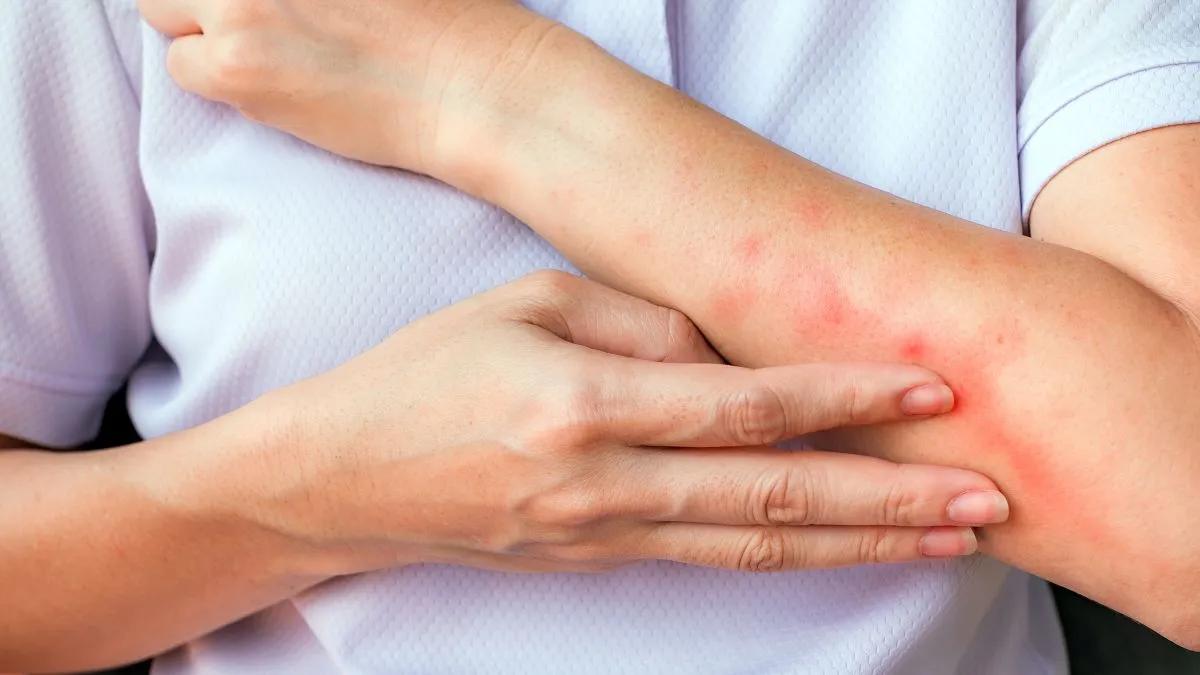
Thirteen confirmed cases of West Nile fever in the country as of 30 July. Ten patients hospitalised at the University Clinic for Infectious Diseases and Febrile Conditions. Three in critical condition. That is the Health Ministry's official figure and it deserves to be read without panic, but also without underestimation.
What these numbers mean, and what they don't
Most infections with this virus pass without any symptoms at all. According to the European Centre for Disease Prevention and Control, around 20 percent of those infected develop fever and milder symptoms, while fewer than one percent develop illness affecting the central nervous system.
Epidemiologist Dr Nikola Danilovski puts it precisely: „The severe form appears in only one percent of all infected persons. Most often these are older people, citizens with chronic conditions and people with severely weakened immunity“. The severe form can cause inflammation of the brain or the brain membranes, weakness and impaired consciousness.
So thirteen confirmed cases does not mean the virus has just arrived. It means thirteen people developed symptoms pronounced enough to be tested. The Institute of Public Health confirms there is local circulation of the virus in Macedonia and that cases are most often registered in the summer and autumn months.
The response: night spraying, and one important objection
The Health Ministry instructed the Skopje Public Health Centre to carry out additional terrestrial - ground-based - adulticidal mosquito control. The extraordinary treatment was carried out overnight. The decision requires every local authority with reported cases to immediately conduct extraordinary ground treatment. The City of Skopje has already completed the tenth regular phase of aerosol and ground disinsection.
Here Danilovski draws a distinction worth holding on to: what is needed in this period is precisely ground-based, local treatment targeting the places where mosquitoes breed - not just spraying from the air. He assesses that the real effectiveness of the institutional measures can only be analysed once the season ends.
That is a polite way of saying: we still don't know whether the spraying works. It is a scientifically correct position, and also a reminder that ten phases of spraying is not the same thing as ten phases of results.
What anyone can do in their own yard
The virus is carried by mosquitoes of the Culex genus, particularly the common house mosquito Culex pipiens. They pick it up from birds, and can then pass the virus to humans and animals. There is no direct human-to-human transmission. There is also no specific vaccine or cure - protection depends entirely on prevention.
The epidemiologist's appeal is concrete: use mosquito repellent, wear clothing that covers more of the body, and remove standing water. Water in saucers under flowerpots, buckets, pet bowls, gutters and old car tyres - all of it is a breeding site. Even a small amount of water is enough for eggs to be laid.
That is the part no ministry can do for you. Spraying kills adult mosquitoes for one night. An emptied saucer under a flowerpot stops them for the next two weeks.
The region: four deaths in Greece
In neighbouring Greece, the National Public Health Organisation recorded four deaths from complications of the virus, all in people over 65. From the start of the year to 29 July, 42 infections were registered there, 37 of them with encephalitis or meningitis. In the previous week alone - 21 new cases.
Health authorities here also issued an appeal to beekeepers to follow the schedule of announced extraordinary spraying in order to protect their hives. A detail showing that even a correct measure has a price somebody pays.
The epidemiologist's message is not panic, but that the season is not over and further individual cases are expected in the coming weeks. That is a sentence worth living with until October - without fear, but also without full saucers under the flowerpots.
The latest 10 news from this category

The World Bank dropped out over misalignment with EU requirements. Construction will take two and a half years, and the...

Of 9,500 square metres of greenery, 268 remain. Terrain with an 80-metre height difference, no erosion study and no opinion...

Gjorgjievski says the system should be ready by the middle of next year. The BRT tender is announced for the...
The second operation at the same site within a year. Gerasimovski himself is appealing to the Labour Ministry - because...
A prosumer scheme, a solar oven and electricity generated by bicycle on Magnolija square. The city that has paid the...
Stefanija Dimovska won two medals at IESO 2026, working in mixed international teams. Before that she was also national champion...
Out of nearly 4.7 million denars, the municipality is putting in around 180,000. The rest comes through the Bureau for...

Ten years working inside the health system - and she still had to pull strings to be admitted. The clinic...
Appeals run from 15 to 25 September. There is not enough space at Goce Delčev, so students go to Stiv...

From 23:00 to 05:00 there is no getting through towards Evzoni. Towards Halkidiki - business as usual. Those heading on...
This site uses cookies - is that okay? Learn more
Be the first to know when Metla launches something new
Leave your email and we will write when there is a new guide or something new on Metla.