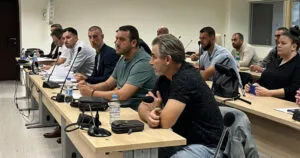
"That's not my job": the trial of the 13 Puls police officers restarted from scratch, and witnesses describe help being refused
22.09.2026


22.09.2026

22.09.2026
22.09.2026

22.09.2026
22.09.2026
22.09.2026
22.09.2026

21.09.2026

20.09.2026

22.09.2026

22.09.2026

21.09.2026
22.09.2026

22.09.2026

22.09.2026

22.09.2026

21.09.2026

20.09.2026

22.09.2026

22.09.2026

22.09.2026
22.09.2026

22.09.2026

22.09.2026

09.03.2026

27.02.2026

19.02.2026

22.09.2026

21.09.2026

21.09.2026

23.04.2026

23.04.2026

12.04.2026

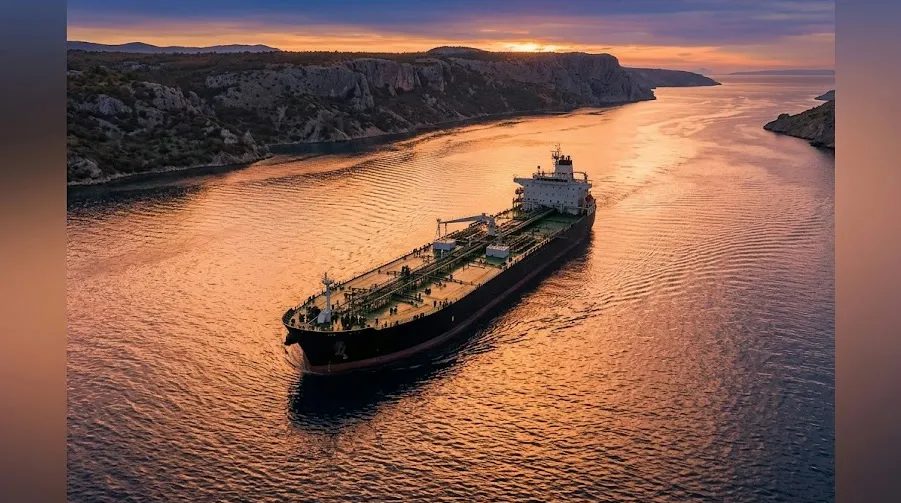
Iran is demanding ships pay up to 2 million dollars to pass through the Strait of Hormuz - with a simple argument: if Suez and Panama can, why not them? The question sounds legitimate, right up to the moment international maritime law gets opened. That is when a tidy distinction shows up - one that is rarely spelled out aloud in diplomatic practice: canals are man-made, straits are natural.
Tehran justifies the levies as "war reparations" and compensation for "navigational services", environmental protection and enhanced security. It is planning a joint protocol with Oman to require special permits for entering the strait. Some Asian shipping companies have quietly agreed to pay. The main global operators - the United States, China and all the Gulf states - are flatly refusing.
Why doesn't this fly? According to maritime experts, UNCLOS (the UN Convention on the Law of the Sea) guarantees "transit passage" through natural straits and prohibits the coastal states from blocking it. Only limited fees are allowed for services such as pilotage and towage. Everything else counts as a breach of international law.
Suez and Panama are a different category. They are man-made waterways, built and maintained by sovereign states at enormous expense. That is why Suez generates around 4 billion dollars a year in transit fees; Panama charges in the same way. The international regime recognises that as an investment being recouped. Hormuz, as a natural strait, is not a construction project - it is there on its own.
What Iran is doing now is testing international law with an economic lever. With one fifth of the world's oil and gas passing through Hormuz, the revenue potential is huge. But the conflict potential is bigger. When one country starts charging for what the law says should be free, the others have two options - pay, or say "no" with a gun. And precisely because of that dilemma, Hormuz has been the most unstable shipping route on the planet for three months now.
The latest 10 news from this category
Washington, Copenhagen and Nuuk are signing off on a military presence on an island of 56,000 people - and the...
Phones in Krāslava rang by themselves, the fighters took off, and what exactly triggered the alert - nobody is saying....
In Mecklenburg the CDU finished on 4.9 percent and, for the first time in the history of the Federal Republic,...

Tisza took 16 years of power off Fidesz and won 141 of 199 parliamentary seats. Orbán now says Brussels is...
With 75 percent of protocols counted, the governing party leads in 208 of the 225 single-mandate districts. A parliament of...
He never sat on the throne, and the emirate is lowering its flags for ten days. Sometimes the surname says...

Three options on the table in Washington - military pressure, economic strangulation or a deal - and the president frames...
The party of Adenauer and Kohl slid to the electoral threshold in Mecklenburg, the AfD is already demanding the chancellor's...
Two prime ministers in the same Union, the same month, completely opposite diagnoses of who is provoking whom. There is...

A broken aircraft in a field usually ends up in a police note. This one ended up with federal investigators,...
This site uses cookies - is that okay? Learn more
Be the first to know when Metla launches something new
Leave your email and we will write when there is a new guide or something new on Metla.