

Kratovo man stabs police officer mid-intervention: prosecutors want the 40-year-old detained
15.09.2026


15.09.2026

15.09.2026
15.09.2026

15.09.2026

15.09.2026

15.09.2026
15.09.2026

14.09.2026
13.09.2026

15.09.2026

15.09.2026

14.09.2026

15.09.2026

15.09.2026

15.09.2026
15.09.2026

14.09.2026
13.09.2026
15.09.2026

15.09.2026

15.09.2026

15.09.2026

15.09.2026

14.09.2026

09.03.2026

27.02.2026

19.02.2026

15.09.2026

14.09.2026

14.09.2026

23.04.2026

23.04.2026

12.04.2026

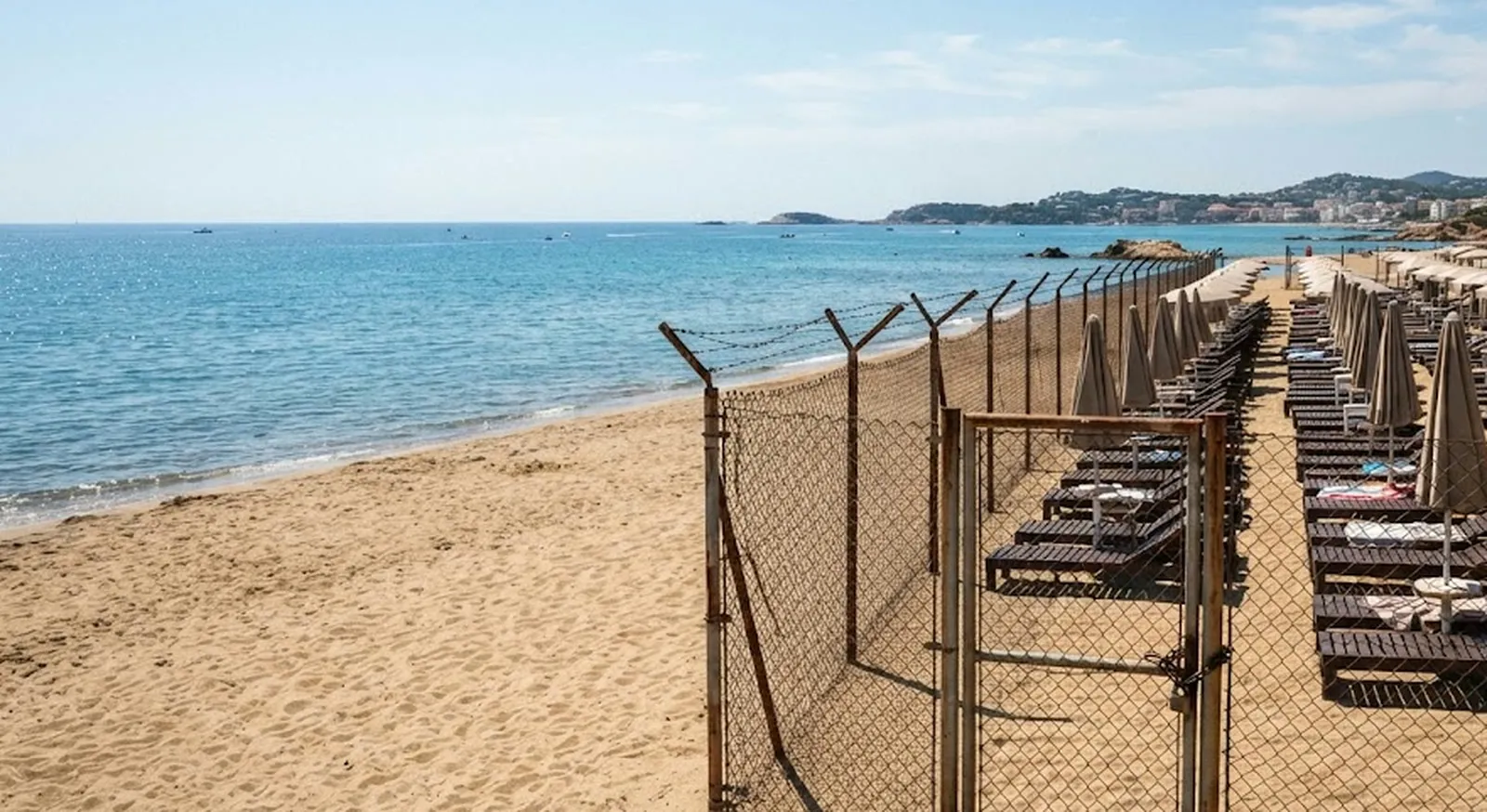
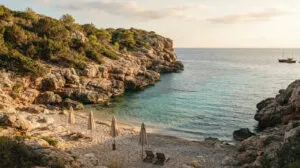
Picture arriving at the seaside and realising that nearly half the coast has its own owner - complete with a wall, a gate and a fee at the entrance. This isn't dystopia, it's the Italian summer. And while the Adriatic feels the same pressure on both shores, the story of how a public beach turns into a private business is worth reading to the end.
Nearly half of Italy's coastline is privatised through the so-called „concessioni balneari" - beach concessions that are triggering ever-sharper clashes between private operators and activists demanding free access to the sea. According to a 2022 Legambiente report, private firms control around 43 percent of the sandy shores, and Italy has roughly 30,000 bathing establishments.
In some places the privatisation is extreme. In Forte dei Marmi a full 94 percent of municipal beaches are leased under concession, in Pietrasanta 98.8 percent, and in Camaiore 98.4 percent. Gatteo a Mare once had not a single free metre of beach - only after residents protested were a mere 10 metres out of 700 set aside for the public.
The price of that „free" sea is very concrete. For an umbrella and two loungers in Milano Marittima you pay 30 euros near the bars, and right by the water the price jumps to 60 euros. Danilo Ruggiero, director of the „Mare Libero" campaign, describes the beaches as „little resorts with restaurants, car parks, pools and other amenities", and compares the shore at Ostia to „a federation of bathing states" fenced off with walls, gates and hedges.
When the sea smells of the Camorra
The story isn't only about expensive umbrellas. In Bacoli, on the north-western edge of the Bay of Naples, the beaches were long in the shadow of organised crime. Mayor Josi Gerardo Della Ragione has fought illegal structures for years. Villa Ferretti, a 19th-century villa, was under the control of the Camorra's Pariante clan until it was seized and turned into a public park.
Part of the coast, in turn, is under military control - at Miseno beach some 100,000 square metres are reserved exclusively for the navy, the air force, the army, the coast guard and the financial police.
The state gets pennies, the operators get billions
The numbers reveal the true scale of the injustice. Until 2020 the minimum annual rent for a beach concession was just 364 euros. According to the Court of Auditors, the state collected 101.7 million euros a year, while the industry generated between 7 and 8 billion euros in revenue. The rents were later raised to 3,225.50 euros a year, but activists say this doesn't solve the underlying problem - the operators still treat the beaches as their private property.
The European Union has been pushing for years. The 2006 Bolkestein Directive required concessions to be awarded through public tender, but Italian governments kept postponing it - the deadline was pushed to 2012, 2015, 2020, and in 2018 the status quo was extended all the way to 2033. A classic Balkan move: the law exists, but there's always one more deadline.
The divide is political too. The left sees the beaches as a public good and a citizens' right, the right defends the concessions as vital tourism infrastructure - tourism accounts for 9.6 percent of Italy's GDP. Giorgia Meloni and Matteo Salvini don't criticise the system. The operators' union claims they raise safety through lifeguards, and its president Antonio Capacchione says Italy has half as many drowning deaths as France precisely because of this model. The activists hit back: a public resource earns profit for the private owners, while all the citizens get is a view of the sea - from behind a paid fence.
The latest 10 news from this category
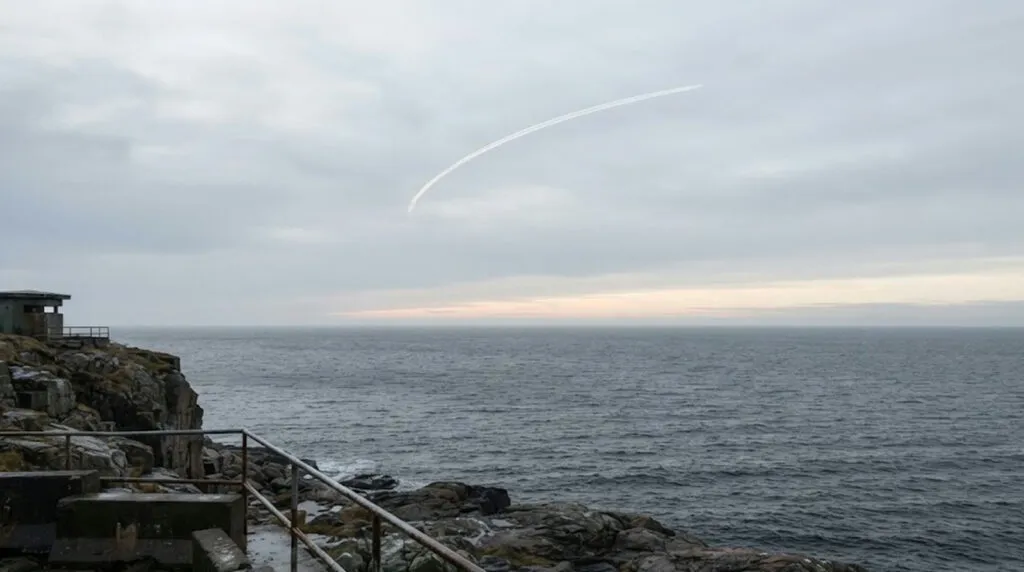
Trump scaled back the military exercises to ease the tension, and Wonsan answered in the form of projectiles. What does...

The sanctions list got a seven-day extension instead of one measured in months, a move diplomats themselves call unprecedented. Two...
Switzerland offered a table for talks on Ukraine, Moscow replied that the table stopped being neutral once Bern adopted EU...
The will says one thing, a committee of twenty-one men decided another. The queen mother says the army pulled the...

A country that was Europe's byword for stability for decades now has a parliament split into two blocs by a...
Sixteen years in power, defeat at a regular election, five months of quiet - and now the election result is...

When an institution with a legal department and a palace apparatus has to publish a list of its verified accounts,...

Nobody said they do not trust Washington. Everyone is behaving as though they do not - gold, weapons, the cloud...
The warning reached the president three years before 9/11. The problem was not a lack of information, but that nobody...
In 1976 tradition demanded the future king choose a bride with no past. Thirty years later that same king married...
This site uses cookies - is that okay? Learn more
Be the first to know when Metla launches something new
Leave your email and we will write when there is a new guide or something new on Metla.
