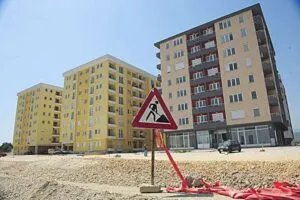
A New Criminal Complaint Against Jakimovski: A Building Permit Based on a Plan Struck Down Back in 2018
16.09.2026


16.09.2026

16.09.2026

16.09.2026
16.09.2026
16.09.2026

16.09.2026
16.09.2026
15.09.2026

14.09.2026

16.09.2026

16.09.2026

15.09.2026

16.09.2026

15.09.2026

14.09.2026

16.09.2026

16.09.2026

16.09.2026

16.09.2026

15.09.2026
15.09.2026

09.03.2026

27.02.2026

19.02.2026
16.09.2026

15.09.2026

14.09.2026

23.04.2026

23.04.2026

12.04.2026

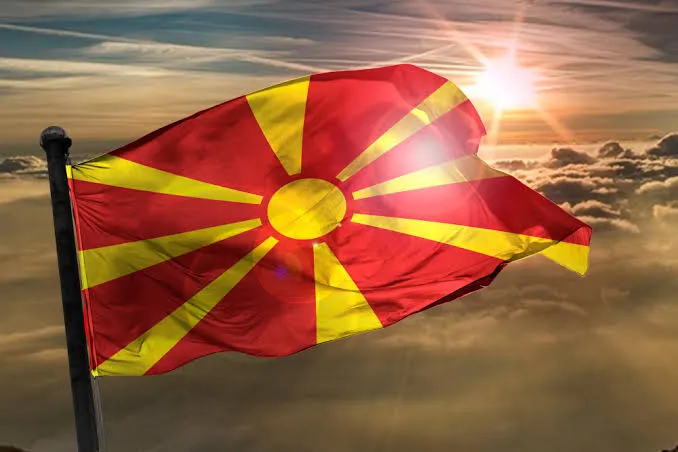
Macedonian politics has one strange constant - almost every prime minister arrived with big promises and left behind deep divisions, disappointment or unsolved problems.
Ljupčo Georgievski came to power as a symbol of hard national rhetoric. Back then the political stage was full of talk of national dignity, historical injustices and grand state ideals. Today, though, it is Georgievski himself who is one of the loudest voices for bringing Macedonian and Bulgarian historical positions closer together - which is why many of his former supporters now see him as a man who completely switched sides.
Branko Crvenkovski defined the transition and the privatisation years. For some it was a necessary step towards a market economy; for others it was a period when factories were shut, tens of thousands of people lost their jobs, and a huge share of state capital ended up in the hands of a small circle. According to many economic analysts, the consequences of that process are still felt today.
Nikola Gruevski ruled for more than a decade on a message of economic growth, investment and a strong state. But his flight from Macedonia to dodge a prison sentence dealt a heavy blow to trust in the institutions. When a former prime minister leaves the country rather than face a final court ruling, the question is unavoidable: how functional was the system he himself built and led? His supporters, for their part, still insist it was a politically motivated persecution.
Zoran Zaev walked into the history books with some of the hardest decisions any Macedonian government has ever taken. Before becoming prime minister he publicly swore he would never accept a change to the country's constitutional name. Later, as head of government, he signed the Prespa Agreement, after which the state changed its name to the Republic of North Macedonia. For some it was a historic compromise that opened the door to NATO and a European future; for others it was the single biggest political concession made since independence.
Dimitar Kovačevski steered the government through an energy and economic crisis, but his term was also marked by the start of the constitutional changes tied to European integration. He failed to secure political consensus for those changes, and public trust in the institutions kept sliding.
Today the government is led by Hristijan Mickoski. He arrived promising to fix many of his predecessors' mistakes and to set up a different model of governing. Whether he pulls it off, time will tell - and the final verdict, as always, will be delivered by the citizens through results, not through political speeches.
For more than three decades Macedonia has been looking for a leader who will be remembered above all for the institutions he built, not for the crises he left behind.
Maybe the biggest problem was never just the individual prime ministers. Maybe the problem is that every new government promises a total turnaround, and very often repeats the exact same mistakes as the last one.
Countries do not advance when every new government starts from zero and blames the one before it. They advance when institutions are stronger than politicians, when laws apply equally to everyone, and when promises are measured not by applause at a rally but by results that citizens feel in their everyday lives.
„What further erodes citizens' trust is the impression that, once their terms are over, many political officials live considerably better off than before they came to power, while the average citizen keeps fighting the same economic problems.“
The latest 10 news from this category
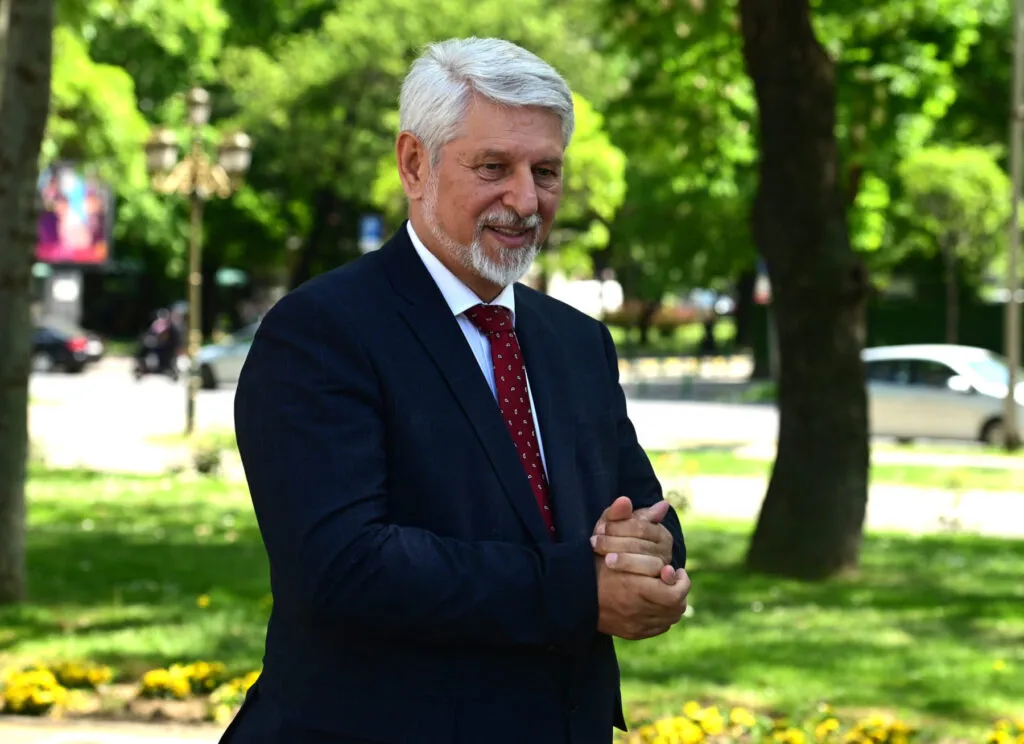
The Constitutional Court annulled the plan seven years ago, the application was rejected twice - and yet someone stamped it...

A 57-year-old woman from Skopje ended up in hospital, while in Gjorce Petrov another woman found a round outside her...

Kumanovo, Veles, Tetovo, Prilep, Rankovce and Skopje four times over. A restraining order is not a warning - it is...

The World Bank dropped out over misalignment with EU requirements. Construction will take two and a half years, and the...
Two senior officials announced progress, the two largest parties denied it the same day. The amendments sit blocked behind 13,500...
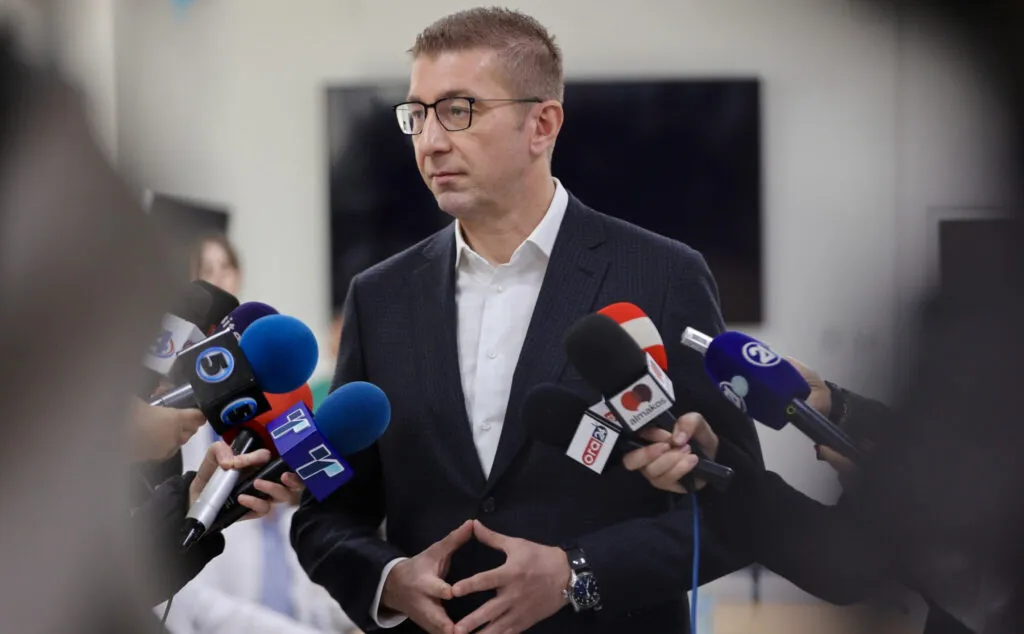
The police acted on their own knowledge, without the PM filing anything at all. The same mechanism exists for every...
Of 9,500 square metres of greenery, 268 remain. Terrain with an 80-metre height difference, no erosion study and no opinion...
Gjorgjievski says the system should be ready by the middle of next year. The BRT tender is announced for the...
The second operation at the same site within a year. Gerasimovski himself is appealing to the Labour Ministry - because...
A prosumer scheme, a solar oven and electricity generated by bicycle on Magnolija square. The city that has paid the...
This site uses cookies - is that okay? Learn more
Be the first to know when Metla launches something new
Leave your email and we will write when there is a new guide or something new on Metla.