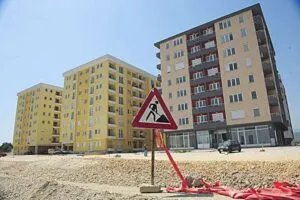
A New Criminal Complaint Against Jakimovski: A Building Permit Based on a Plan Struck Down Back in 2018
16.09.2026


16.09.2026
16.09.2026

16.09.2026
16.09.2026
16.09.2026

16.09.2026

16.09.2026

15.09.2026

14.09.2026

16.09.2026

16.09.2026

15.09.2026

16.09.2026

15.09.2026

14.09.2026

16.09.2026

16.09.2026

16.09.2026

16.09.2026

15.09.2026
15.09.2026

09.03.2026

27.02.2026

19.02.2026
16.09.2026

15.09.2026

14.09.2026

23.04.2026

23.04.2026

12.04.2026

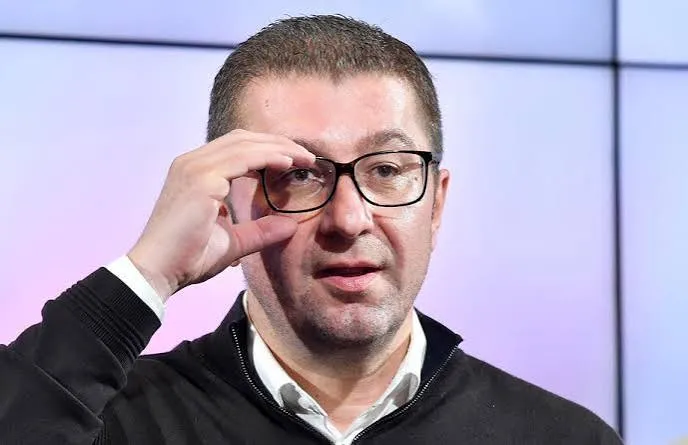
The government reshuffle opened one simple but awkward question: if the ministers who left kept reporting successes, growth, reforms and historic results, why did they have to be replaced?
Prime Minister Hristijan Mickoski presented the changes as bringing in „new energy, new pace and even greater responsibility“. Earlier, he said the ministers to be replaced were those from whose portfolios he had expected more engagement over the past two years.
The outgoing agriculture minister, Cvetan Tripunovski, only a few weeks before he was dismissed, claimed agriculture was posting growth.
He stated:
„Our dedicated work is spoken for by results and figures.“
Tripunovski boasted of 417 million euros in exports of agricultural products and processed goods in 2025, a surplus of 215 million euros, production growth of 3.3 percent in the first quarter of 2026, and increased subsidies that had been paid out.
Only a few weeks later, his „dedicated work“ ended in a dismissal.
In his place came Borče Serafimovski, until then a state secretary in the very same ministry. Which means the new man meant to bring change is not coming from the outside, but from the very leadership structure that took part in running the portfolio so far.
The outgoing justice minister, Igor Filkov, also insisted the reforms were being carried out intensively.
His message was:
„We are working intensively, with clear momentum and measurable results.“
Filkov spoke of delivering reform measures on a deadline of June 2026 and claimed the focus was on concrete results.
Earlier he stressed there is no democracy without an independent judiciary and no rule of law without accountability.
The outgoing health minister, Azir Aliu, right before the reshuffle claimed he was not thinking about his own political future, but about the results he was leaving behind.
At the end of 2025, Aliu published a rundown of the reforms he had launched and the health priorities for 2026.
But he did not stay to see those priorities carried out. In his place, Saško Klekovski was appointed.
Klekovski immediately announced that his priorities would be the Clinical Centre and the regional hospitals, while stressing that over two years nine billion denars more had been pumped into the health system.
That creates an odd situation: the new minister takes over the portfolio claiming the system has already received a huge financial boost, while his predecessor leaves even though he was talking about reforms and results.
Citizens, however, do not measure healthcare by press conferences, but by waiting lists, the availability of medicines, conditions in hospitals and how fast they get an appointment or an operation.
Fatmir Limani was removed from the Ministry of Social Policy, Demography and Youth, and in his place came the former deputy minister Đoko Velkovski.
Velkovski, back when he was still deputy minister, was saying:
„Our goal is to create conditions for young people to build their future in Macedonia.“
He announced the Strategy for Demographic Resilience 2026-2046, meant to offer long-term solutions to the shrinking population, the emigration of the young and the ageing of the population.
But Velkovski, too, has until now been part of the leadership of the same portfolio. So it is unclear whether this is a genuine shift in policy or just a move from the deputy's chair into the minister's.
The outgoing minister of local self-government, Zlatko Perinski, was replaced - but did not end up without a post. He was shifted to a leadership position in the Health Insurance Fund, into the very spot vacated by Saško Klekovski.
This is a further puzzle about the criteria for the reshuffle. If Perinski did not have enough results as a minister, why does he immediately get a leadership job in one of the most important and financially most powerful health institutions?
And if he did work successfully, why was he pulled out of the ministry at all?
Culture and tourism minister Zoran Ljutkov also left the government. The portfolio was taken over by Sedat Sulejmani.
Over the past period the government regularly published information about renovations under way, cultural projects and new investments. But the reshuffle came with no detailed public analysis of what had actually been delivered from the promises, what was running late, and what concrete mistake the outgoing minister had made.
Instead of a report with measurable indicators, the public once again got a vague formula about „new energy“.
The reshuffle also removed Šaban Saliu, the minister without portfolio in charge of integration and implementing the Strategy for the Roma. Erdžan Demir was chosen as the new minister without portfolio.
Agon Ferati was chosen as minister for the political system and relations between communities.
With these posts too, the public has yet to hear what specifically was not delivered by the previous officials and by what indicators the work of the new ones will be judged.
The reshuffle brought in:
But the government did not publish a clear report with an individual assessment of each dismissed minister: which goals he failed to meet, which projects are behind schedule, how much money was spent, and what exactly his successor is supposed to fix.
On the Macedonian political stage, ministers almost never leave because they admit failure.
They leave with letters of thanks, praise for their dedication and claims that they left behind significant results. The new ministers arrive with promises of accelerated reforms, new momentum and a better future.
So everyone is a success - and yet the government still has to change nearly a third of its line-up.
A real reckoning is not the statement that the work was done „intensively“. A reckoning means publicly disclosing the promised and delivered projects, the money spent, the deadlines that were missed and the concrete reasons why a given minister was replaced.
Without such a reckoning, the reshuffle looks more like a political reshuffling of the chairs than a serious effort to pin down accountability.
And once again the citizens are expected to believe that those who until yesterday were part of the very same system will, from today, change it with „new energy“.
The latest 10 news from this category
The Constitutional Court annulled the plan seven years ago, the application was rejected twice - and yet someone stamped it...
A 57-year-old woman from Skopje ended up in hospital, while in Gjorce Petrov another woman found a round outside her...

Kumanovo, Veles, Tetovo, Prilep, Rankovce and Skopje four times over. A restraining order is not a warning - it is...

The World Bank dropped out over misalignment with EU requirements. Construction will take two and a half years, and the...
Two senior officials announced progress, the two largest parties denied it the same day. The amendments sit blocked behind 13,500...
The police acted on their own knowledge, without the PM filing anything at all. The same mechanism exists for every...

Of 9,500 square metres of greenery, 268 remain. Terrain with an 80-metre height difference, no erosion study and no opinion...
Gjorgjievski says the system should be ready by the middle of next year. The BRT tender is announced for the...
The second operation at the same site within a year. Gerasimovski himself is appealing to the Labour Ministry - because...
A prosumer scheme, a solar oven and electricity generated by bicycle on Magnolija square. The city that has paid the...
This site uses cookies - is that okay? Learn more
Be the first to know when Metla launches something new
Leave your email and we will write when there is a new guide or something new on Metla.