

Counter-terror raid in Skopje: an ISIS flag and weapons, while official details come "once it's over"
29.09.2026


29.09.2026

29.09.2026
29.09.2026

29.09.2026

29.09.2026

29.09.2026

29.09.2026

28.09.2026

27.09.2026

29.09.2026

29.09.2026

28.09.2026

29.09.2026

29.09.2026

29.09.2026

29.09.2026

28.09.2026

27.09.2026

29.09.2026

29.09.2026

29.09.2026

29.09.2026

29.09.2026

28.09.2026

09.03.2026

27.02.2026

19.02.2026

29.09.2026

28.09.2026

27.09.2026

23.04.2026

23.04.2026

12.04.2026

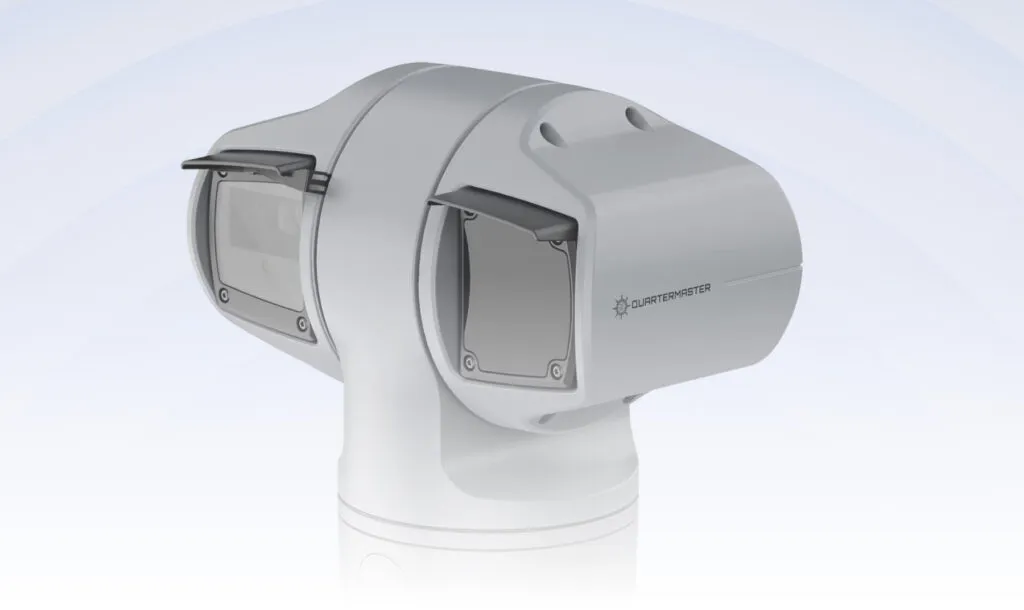
Arlington-based startup Quartermaster has raised 140 million dollars (around 122 million euros) in a Series B round - just four months after closing a 43-million-dollar Series A in May. About 100 million came from Insight Partners, which pre-empted the round before it even opened, from new investor Overmatch Ventures, a defence-focused fund, and from existing backers such as First Round Capital. The remaining 40 million is a credit line from investment bank Stifel.
Founder and CEO Neil Sobin doesn't pretend the timing is a coincidence. Interest in what he's building, he says, was driven by the war in Iran and the chaos it caused in shipping. "World events bring that clarity, they bring the conviction and the urgency, and when you see that, you have to seize the opportunity," he said.
The product is as simple as it sounds. SmartMast is a package of cameras and radios mounted on the mast that sends real-time images of what's happening around the ship. The existing standard, the AIS system, is essentially a string of location signals. With it you know where a ship is; with the camera you see what it's doing. Each unit records tens of gigabytes a day, and uses range from collision avoidance and measuring congestion on sea lanes to rescuing sailors lost overboard.
The device is already installed on more than 650 ships in 25 countries, and over 800 have been delivered - the gap is because the company is starting to equip entire fleets. Production has doubled, and the design is being changed so it can be built faster. The data is aimed at governments, shipping companies and insurers - exactly those with the most to lose when the sea becomes unpredictable.
Sobin calls this a neglected field: "Mariners around the world have been ignored by technology for a very long time." Maybe. But when a defence fund joins a round that a war accelerated, the question is whose eyes those cameras on the masts will really be - the captain's, or someone else's?
The latest 10 news from this category

One manager had to ask for special permission to pay staff more after a fast-food restaurant across the street took...

A test that until now was done by elite athletes in labs is supposed to reach gyms, with no operator...

The supersonic jet maker wanted to fund its planes with electricity for data centres. Its launch partner walked away before...

You say what you want, the machine builds the app - and investors are paying more and more for it....

While others copy Chinese motors on American soil and wait for domestic magnets, Modal Motors is taking rare earths out...

The labs have hit the limit of what can be scraped off the internet for free, so now they buy...

The 50-megawatt reactor is due to start up in 2030, and by 2035 Google wants 500 megawatts. When data centres...

Tinex, SuperTinex, Konto and Spot move to a Pristina-based group with 235 million euros in turnover. The commission saw no...

The WHO has declared loneliness a global health problem linked to around 870,000 deaths a year. On America's east coast...

Porsche, Alaska Airlines and J.B. Hunt are not buying startups - they are commissioning them. When innovation moves inside the...
This site uses cookies - is that okay? Learn more
Be the first to know when Metla launches something new
Leave your email and we will write when there is a new guide or something new on Metla.