
Sixteen Arrests in Twenty-Four Hours, All for Drugs: The Police Are Working - But Where Are All These People Coming From?
20.09.2026


20.09.2026

20.09.2026
20.09.2026
20.09.2026

20.09.2026

20.09.2026

20.09.2026
19.09.2026

18.09.2026

20.09.2026

20.09.2026

19.09.2026

20.09.2026

20.09.2026

20.09.2026

20.09.2026

19.09.2026

18.09.2026

20.09.2026

20.09.2026

20.09.2026

20.09.2026

20.09.2026

20.09.2026

09.03.2026

27.02.2026

19.02.2026

20.09.2026

19.09.2026

18.09.2026

23.04.2026

23.04.2026

12.04.2026

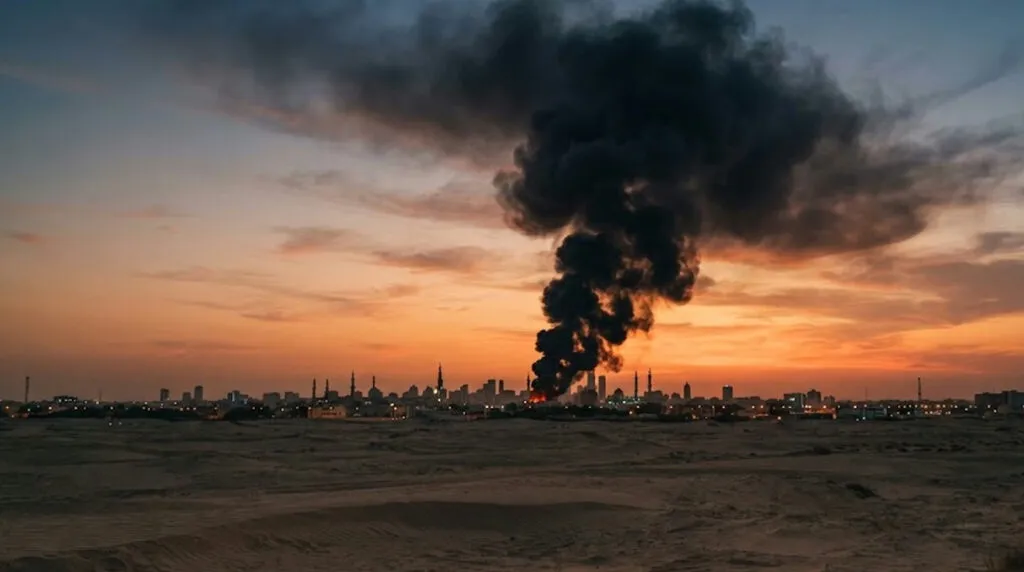
A black cloud over Riyadh, a fire near the main airport and an alarm siren that woke residents in the middle of the night. The Houthis in Yemen then announced that the attack was theirs - and that it was revenge.
The movement's spokesman, Yahya Saree, said a "large number of ballistic and cruise missiles and drones" had been used and that "sensitive targets" in Riyadh had been struck, along with facilities of the state oil company Aramco in Yanbu - an export port on the Red Sea. The Saudi authorities have still not said whether the claim is accurate, or what actually set the tank near the airport alight. Silence from the side with the most reason to speak.
What has been confirmed is enough. Black smoke rose over the city for hours, footage shows fire behind a fuel tank, and airport operations were disrupted by long delays and cancelled flights. Residents of Riyadh and nearby Al-Kharj received an air raid warning, and one 27-year-old described hearing a siren first and then feeling his windows shake. According to reports, this is the first time residents of the Saudi capital have received such a warning at this stage of the escalation.
The war nobody is counting
Saree says the operation was a response to Riyadh's attempts to strike Sanaa and that Saudi Arabia carried out around 300 air strikes on Yemen in a single week. The Saudi side neither confirms nor denies. On the same day, 48 people died in fighting between the Houthis and Yemeni government forces - 31 fighters according to the Houthis, 17 soldiers according to government sources. Not one of those figures has been independently verified, and that is the most accurate description of the entire Yemeni war: everyone counts, nobody confirms.
The Houthis, linked to Iran, control most of northern Yemen and have fought for years against the internationally recognised government backed by Riyadh. In recent weeks they have intensified attacks on Saudi cities, on energy infrastructure and on shipping in the Red Sea. They recently took the port town of Mocha and the island of Perim - exactly where Bab el-Mandeb narrows, one of the most important maritime passages for oil and goods in the world.
This is where the story stops being distant. After the disruptions to traffic through the Strait of Hormuz, part of Saudi exports were redirected precisely toward the Red Sea. Now that route is burning too. When both main exits for Gulf oil are under pressure at the same time, it stops being a question only for Riyadh and Sanaa - it becomes a question for every market that depends on deliveries from there.
The Balkans know this scene by heart: a conflict fought for years away from the cameras, remembered by the world only when it catches something burning that can be seen from a distance. How long does a war have to last before it stops being news - and what has to explode for it to become news again?
The latest 10 news from this category
Western agencies say no decision has been taken - only preparations that would let it all happen overnight. In the...
A Russian commander promised to cut the Kharkiv encirclement "like a pie". Every number comes from the camp running the...
Around 8,500 North Korean soldiers are still in Russia, among them 1,000 engineers and 400 drone operators. Estimates point to...
The unit was running, the operating regime did not change, there was no fire. The difference between a news item...
The bill passed with 262 votes, and the key to it has been handed to a man who has already...
Ukraine adapts in weeks, the Alliance in decades. Europe is paying for Patriot systems from 1991 and is only now...
Missiles and drones on the Ukrainian capital, damaged water mains and residential buildings. The same night, Ukrainian drones set the...

Trump hopes the war is ending and is preparing to gather the Gulf leaders. Oil prices have jumped, and the...
Ukraine says when, where and which unit did it. Russia's defence ministry has not a single sentence about the circumstances....
Norway's prime minister talks about a plane a drone "almost hit". Moldova, the only party holding the figures, reported that...
This site uses cookies - is that okay? Learn more
Be the first to know when Metla launches something new
Leave your email and we will write when there is a new guide or something new on Metla.