
"That's not my job": the trial of the 13 Puls police officers restarted from scratch, and witnesses describe help being refused
22.09.2026


22.09.2026

22.09.2026

22.09.2026

22.09.2026
22.09.2026

22.09.2026

22.09.2026

21.09.2026

20.09.2026

22.09.2026

22.09.2026

21.09.2026

22.09.2026

22.09.2026

22.09.2026

22.09.2026

21.09.2026

20.09.2026

22.09.2026

22.09.2026

22.09.2026

22.09.2026

22.09.2026

22.09.2026

09.03.2026

27.02.2026

19.02.2026

22.09.2026

21.09.2026

21.09.2026

23.04.2026

23.04.2026

12.04.2026

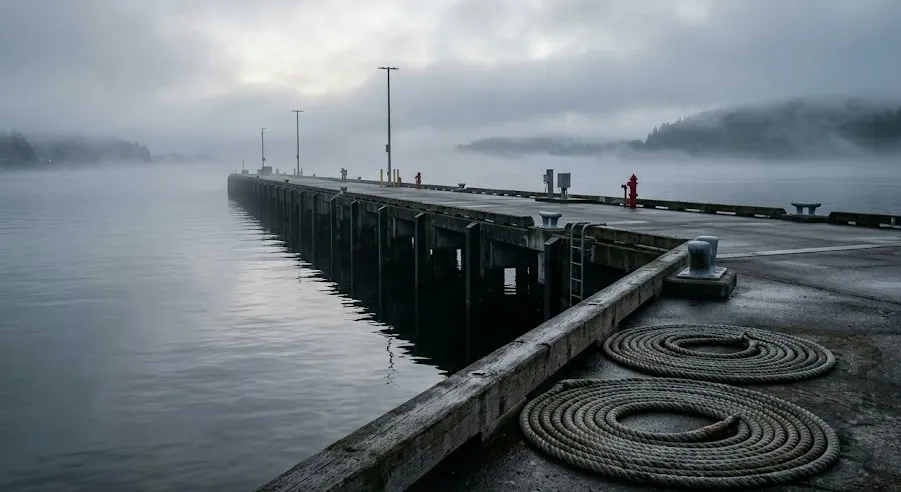
At a closed meeting of NATO's political directors, Washington informed allies that it plans to gradually reduce the strategic military assets allocated to the alliance - bombers, fighter jets, drones, submarines, destroyers. The declared motive: pressure on Europe to take greater responsibility for its own defence.
The details are murky. Pentagon adviser Alexander Velez-Green conveyed the message, confirmed by two alliance diplomats who asked to remain anonymous. Concrete numbers and a timeline - none. „Certain capabilities will remain untouched, others will be withdrawn entirely, others reduced by half or a third," one of the diplomats said. There is no final decision anywhere - not even inside US government circles.
This is the third Russian reality of the new administration. First 5,000 troops were pulled out of Germany (later revealed to include 4,000 from Poland), then Trump reversed course and promised another 5,000 for Poland. Now - destroyers and submarines. Nobody knows what the strategy is, because the previous moves themselves don't carry an internal line.
The US is at the same time insisting that nuclear defence guarantees remain unchanged. That's a paradox European defence ministers understand - American nuclear warheads in Europe only work if there's a conventional military force backing up the political will. Without bombers and submarines, nuclear protection becomes theoretical.
Expert analyses are dark. Jennifer Kavanagh of Defense Priorities argues that certain gaps will be particularly hard to fill - submarines and strategic bombers have a development cycle measured in decades. European countries can't just buy American tanks and swap the problem.
For the Balkans, this is a direct subject. Macedonia and Albania are NATO members, and their security depends on American strategic assets. If an American submarine no longer patrols the Mediterranean at the same rhythm, if strategic bombers no longer fly over the Balkans and the Black Sea, that does not mean security disappears - but it does mean it will have to be provided with fewer resources and greater European engagement.
The question that not only NATO but Brussels has to answer in the coming months: is Europe ready, or not, to take on more responsibility? Up to now we've had more declarations than yielded percentage points of GDP. With 12 months to a possible Russian escalation - time is already weighing on our shoulders.
The latest 10 news from this category

Washington, Copenhagen and Nuuk are signing off on a military presence on an island of 56,000 people - and the...
Phones in Krāslava rang by themselves, the fighters took off, and what exactly triggered the alert - nobody is saying....

In Mecklenburg the CDU finished on 4.9 percent and, for the first time in the history of the Federal Republic,...

Tisza took 16 years of power off Fidesz and won 141 of 199 parliamentary seats. Orbán now says Brussels is...
With 75 percent of protocols counted, the governing party leads in 208 of the 225 single-mandate districts. A parliament of...

He never sat on the throne, and the emirate is lowering its flags for ten days. Sometimes the surname says...

Three options on the table in Washington - military pressure, economic strangulation or a deal - and the president frames...
The party of Adenauer and Kohl slid to the electoral threshold in Mecklenburg, the AfD is already demanding the chancellor's...
Two prime ministers in the same Union, the same month, completely opposite diagnoses of who is provoking whom. There is...
A broken aircraft in a field usually ends up in a police note. This one ended up with federal investigators,...
This site uses cookies - is that okay? Learn more
Be the first to know when Metla launches something new
Leave your email and we will write when there is a new guide or something new on Metla.