Smugglers Dragged a Police Officer With Their Vehicle at Blace: the Second Car Is What Tells You This Wasn't an Accident
14.09.2026


14.09.2026

14.09.2026

14.09.2026

14.09.2026

13.09.2026

12.09.2026

14.09.2026

14.09.2026

13.09.2026

14.09.2026

14.09.2026

14.09.2026

14.09.2026
13.09.2026

12.09.2026

14.09.2026

14.09.2026

14.09.2026

14.09.2026

14.09.2026

13.09.2026

09.03.2026

27.02.2026

19.02.2026

14.09.2026

14.09.2026

13.09.2026

23.04.2026

23.04.2026

12.04.2026


The average Macedonian spends 31.8 years of their life working. The average Dutch person - a full 44. A gap of more than a decade isn't a statistical footnote; it's a mirror of two completely different economies: one where work lasts a lifetime, and one where you enter late, leave early, and emigrate somewhere in between.
Eurostat puts the average working life across the European Union at 37.5 years in 2025, on a steady climb - up from 35.2 years back in 2016. The Netherlands tops the list at 44 years, followed by Sweden at 43.4 and Denmark at 42.6. These are societies where a person genuinely spends four decades in the labour market.
Macedonia is at the bottom. With 31.8 years of working life, it sits below every neighbour in the region - Serbia at 35.5, Croatia at 35.1, Slovenia already close to the European average at 37.2. We lag around six years behind the EU average and a few behind each of our neighbours. A number that says more than any survey on living standards.
Why so short? The answer isn't laziness, it's structure. Young people here enter the official labour market later - long studies, an informal economy, off-the-books work that never gets counted. Many leave the country early and spend their working years somewhere in the West. And those who stay often end up in a market of low wages and precarious contracts, where the pension is something you wait for, but a career rarely runs unbroken for forty years.
A short working life isn't just a sociological trait - it directly weighs on the pension fund. Fewer years of contributions mean less money in a system that has to support an ever-growing number of pensioners. Every year less worked by the average citizen is a hole that someone will later have to fill.
That's why 31.8 isn't just the bottom of a table. It's a warning - about a labour market that doesn't hold on to people long enough, and about a system that, on that foundation, keeps making promises it can increasingly barely keep.
The latest 10 news from this category

The tax falls, petrol gets more expensive - both true at the same time. The measure lasts fourteen days, and...
Two calls offer up to 500,000 denars per company, with a university as a mandatory partner. The idea is good...

Nobody pulls out a vine out of spite. You pull it out when the numbers stop adding up - and...
Sixteen thousand tonnes of copper a year against ten years of resistance around Strumica. The question is not mine or...

A researcher quit because the firms are gambling with our lives. Instead of denying it, Anthropic confirmed it - with...
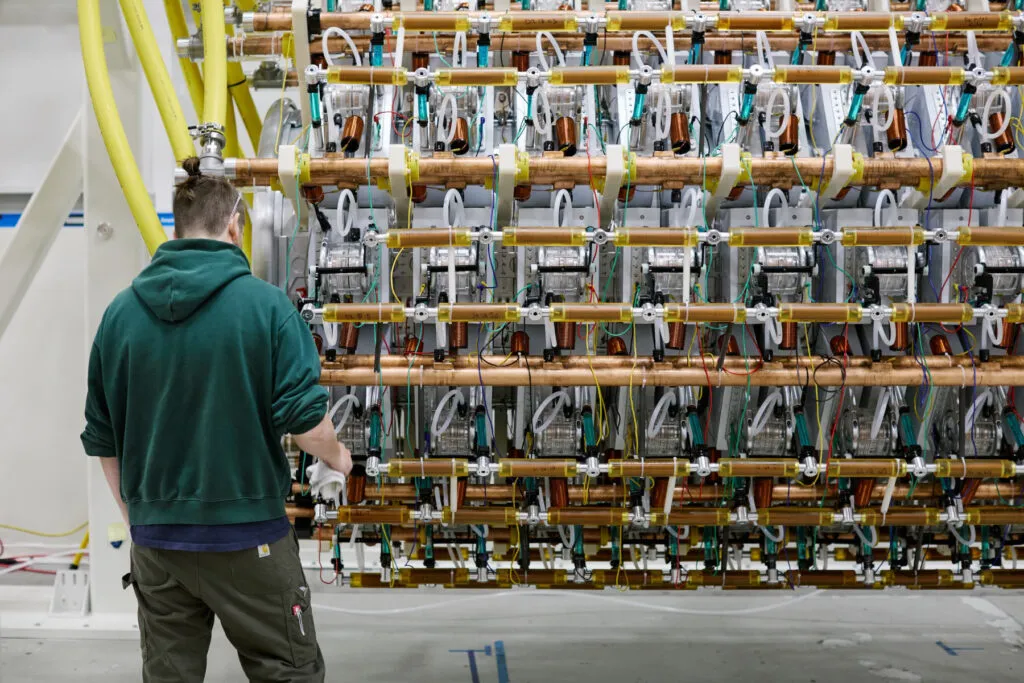
A technology sold for decades as the answer to the climate is now taking money from the defence industry. The...

Write a sentence, get a game. Until now it worked only in New Zealand, now in Belgrade too. Creators on...

The deficit target raised from 3.5 to 4.1 percent of GDP, spending growing faster than revenue, and the growth forecast...

On euro loans with a variable rate, the rise comes due at the next reset. On fixed ones, it does...

The agreed price for first class is 40 denars. At the collection points they pay 15 to 18. Across the...
This site uses cookies - is that okay? Learn more
Be the first to know when Metla launches something new
Leave your email and we will write when there is a new guide or something new on Metla.