

Kratovo man stabs police officer mid-intervention: prosecutors want the 40-year-old detained
15.09.2026


15.09.2026

15.09.2026
15.09.2026

15.09.2026
15.09.2026
15.09.2026

15.09.2026

14.09.2026

13.09.2026

15.09.2026

15.09.2026

14.09.2026

15.09.2026

15.09.2026

15.09.2026

15.09.2026

14.09.2026

13.09.2026
15.09.2026

15.09.2026

15.09.2026

15.09.2026

15.09.2026

14.09.2026

09.03.2026

27.02.2026

19.02.2026

15.09.2026

14.09.2026
14.09.2026

23.04.2026

23.04.2026

12.04.2026

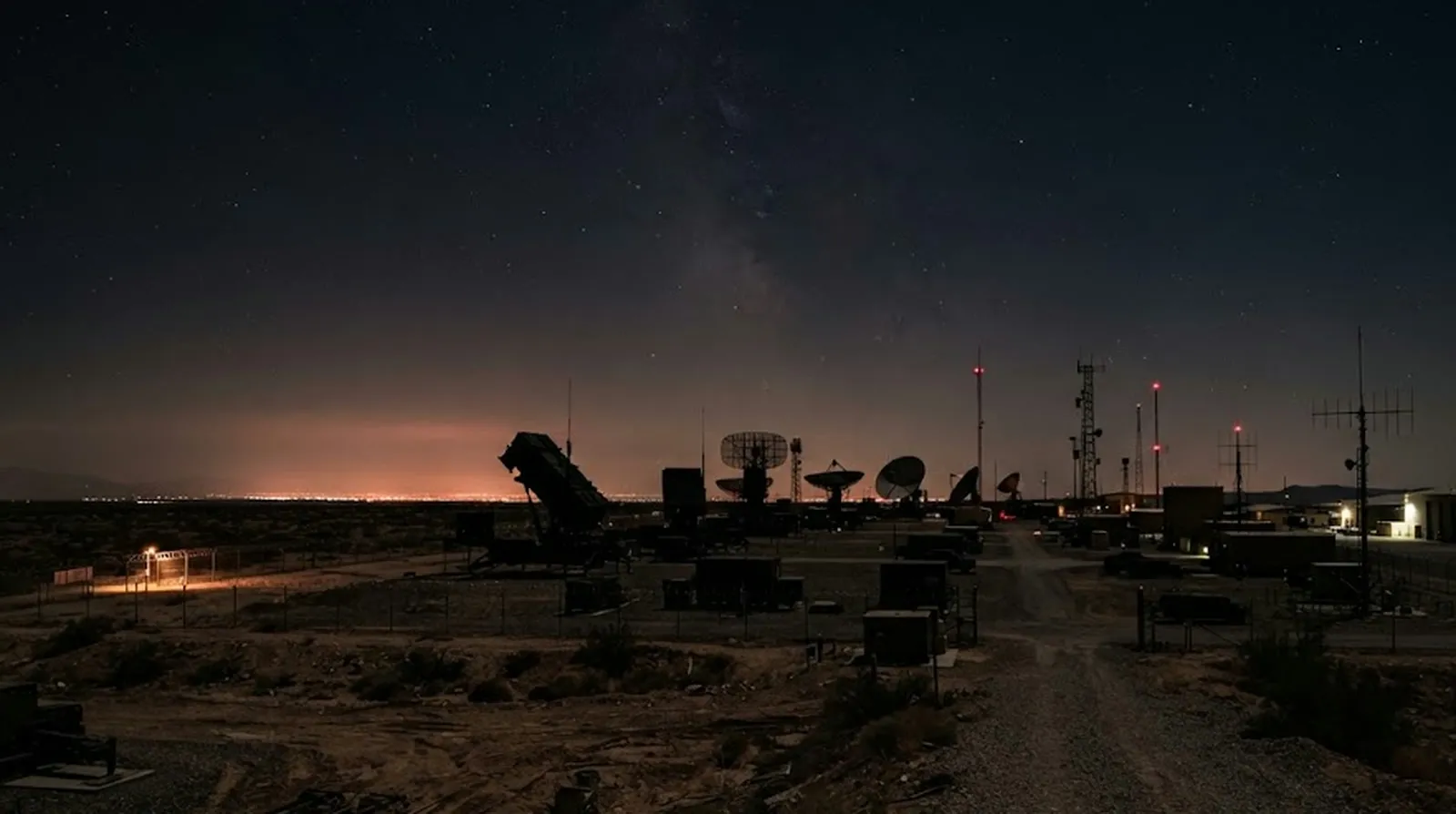
Two American soldiers dead, one listed as missing, several more wounded. Iranian missiles hit the Muwaffaq Salti air base in Jordan - and in Washington they are no longer asking only how Iran struck, but who helped it strike so precisely.
According to sources close to the investigation, US agencies are checking whether Russia handed the Iranian side intelligence - satellite imagery, radar readings, technical help - in order to punch through American air defences. There is no direct proof. But the question has been asked, and that alone says a great deal about where the world has gone.
Missiles that change course in the last second
What rattled American analysts is not the number of missiles, but their behaviour. The Iranian projectiles showed the ability to change trajectory, altitude and angle of impact right before the target - a manoeuvre that shortens the time to intercept and leaves defence systems without enough seconds to react. This is not technology you buy at a market. This is technology someone taught you to use.
The Iranian strikes, according to the same sources, systematically hit radar and communications systems across Jordan, Qatar, Kuwait, Bahrain, Saudi Arabia and the United Arab Emirates. Not random targets - but precisely the gaps that give the American military its eyes and ears in the region.
Moscow, Beijing and a newspaper from March
The suspicion towards Russia does not fall out of a clear sky. Back in March, an American financial paper wrote that Moscow had earlier handed the Iranian side satellite imagery and drone technology. Now China is being added to the list of suspects too - through the coordination of intelligence satellites.
The official line stays cautious: public evidence of direct Russian or Chinese involvement in this specific attack has not been presented. But when three of the largest military powers on the planet suspect that intelligence networks are interlacing against a fourth, the word „caution” sounds like a diplomatic term for something much larger.
Trump's answer
The US president ordered retaliatory strikes on Iranian surveillance capacities, military logistics, weapons depots and naval assets. The strike-retaliation-strike cycle the Balkans recognise perfectly - only this time it is played with missiles crossing continents, not borders.
For the reader here, the question is not whether this is far away. The question is how long a calculation like this stays „someone else's problem” before it starts carving up the prices, alliances and peace of an entire region. The Balkans know this scene by heart: the great powers play their games, and the small countries pay the consequences.
The latest 10 news from this category
Between 2,300 and 3,000 North Korean soldiers have died in Kursk so far. Kim Jong Un has found an export...
A NATO fighter jet downed an unmanned aircraft over Lithuania minutes after midnight, and citizens got the warning on their...
The train was empty, the locomotive damaged, nobody hurt. But Boris Johnson and a group of European security advisers had...
453 drones in one night, 405 shot down - and the forty-eight that got through land somewhere. Poland's prime minister...

Trump's son-in-law told an audience in Kyiv the deal is done - if Ukraine withdraws. And added that the battlefield...

A barren volcanic rock in the middle of a strait 28 kilometres wide changed the oil market in a single...
Hostomel, Odesa, Kryvyi Rih - targets that are not the front line but the supply chain. A war against the...

We don't want war with Europe, but here is exactly how that war would start. He said both sentences in...

When an army recalls its special forces with a 12-hour deadline, that is not a rota but a signal. The...

Port infrastructure in Makhachkala and the theatre building caught fire, the governor said. Moscow claims it shot down 448 drones...
This site uses cookies - is that okay? Learn more
Be the first to know when Metla launches something new
Leave your email and we will write when there is a new guide or something new on Metla.
